YourMenu Case 4 of 4
Ordering dinner in Japan without speaking Japanese
A concept app: pick dishes, see names, prices and translations, then show your phone to the waiter.
In short
Japan gets tens of millions of foreign visitors a year, and most of them can’t read a Japanese menu.
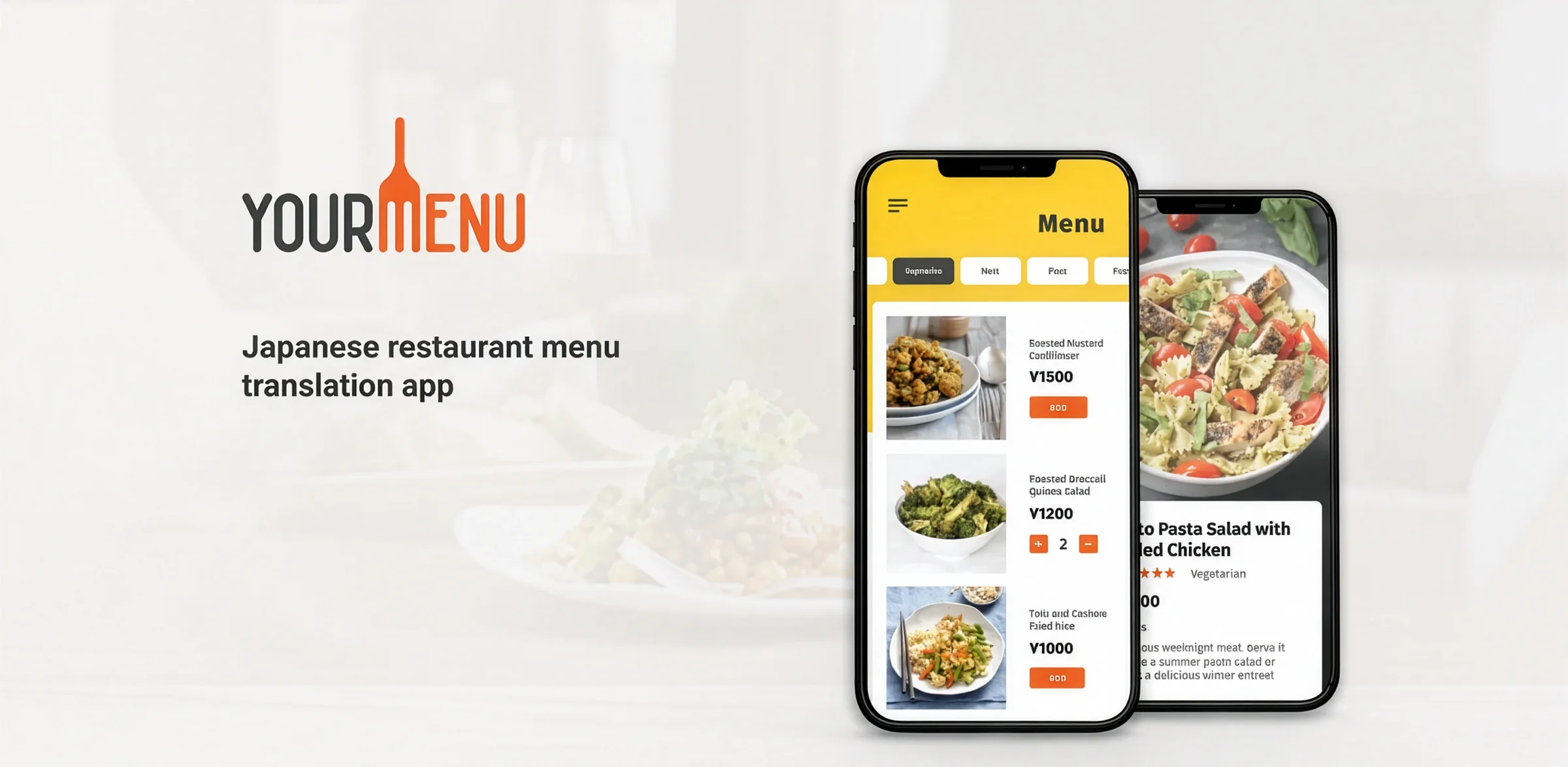
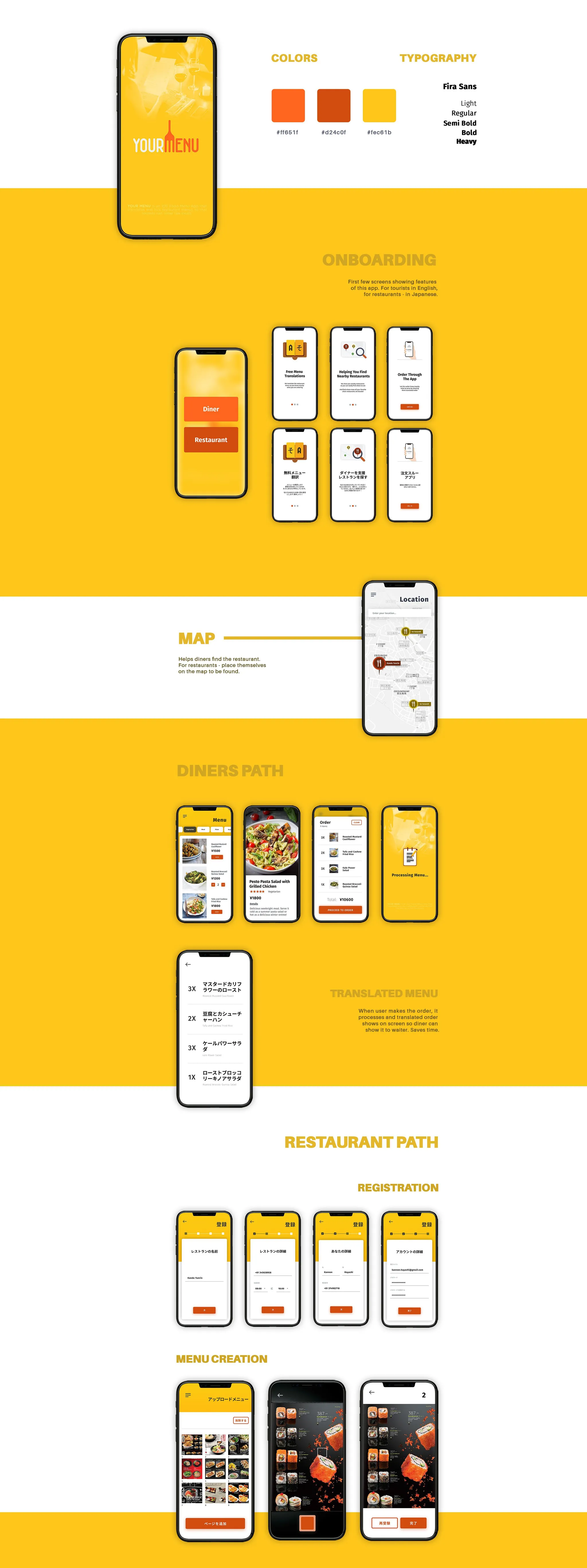
YourMenu shows the restaurant’s dishes with names, prices and translations. You pick what you want and show your phone to the waiter.
Goal
Tourists order what they actually want, and restaurants serve people they couldn’t talk to before.
Success metrics
- Orders placed without help from staff
- Time from sitting down to ordering
- Ordering mistakes
- Restaurants listing their menu
- Diner ratings after the meal
Decisions that shaped it
Help the waiter, don’t replace them
The app could have taken the order on its own, and technically it can. But talking to the waiter is part of eating out, so the main screen is something you hold up and show, not a checkout.
English first
Most visitors from outside Asia come from the US and Australia, so English came first. The structure was built so more languages can follow without redesigning a single screen.
Built for a first-time user
Anyone, from anywhere, has to get it in seconds while a waiter is standing there. So every dish gets a big photo, a clear price and one obvious action.
A small system first
Colours, type and a handful of components came before the screens, so every screen for diners and restaurants is built from the same parts.
How I got there
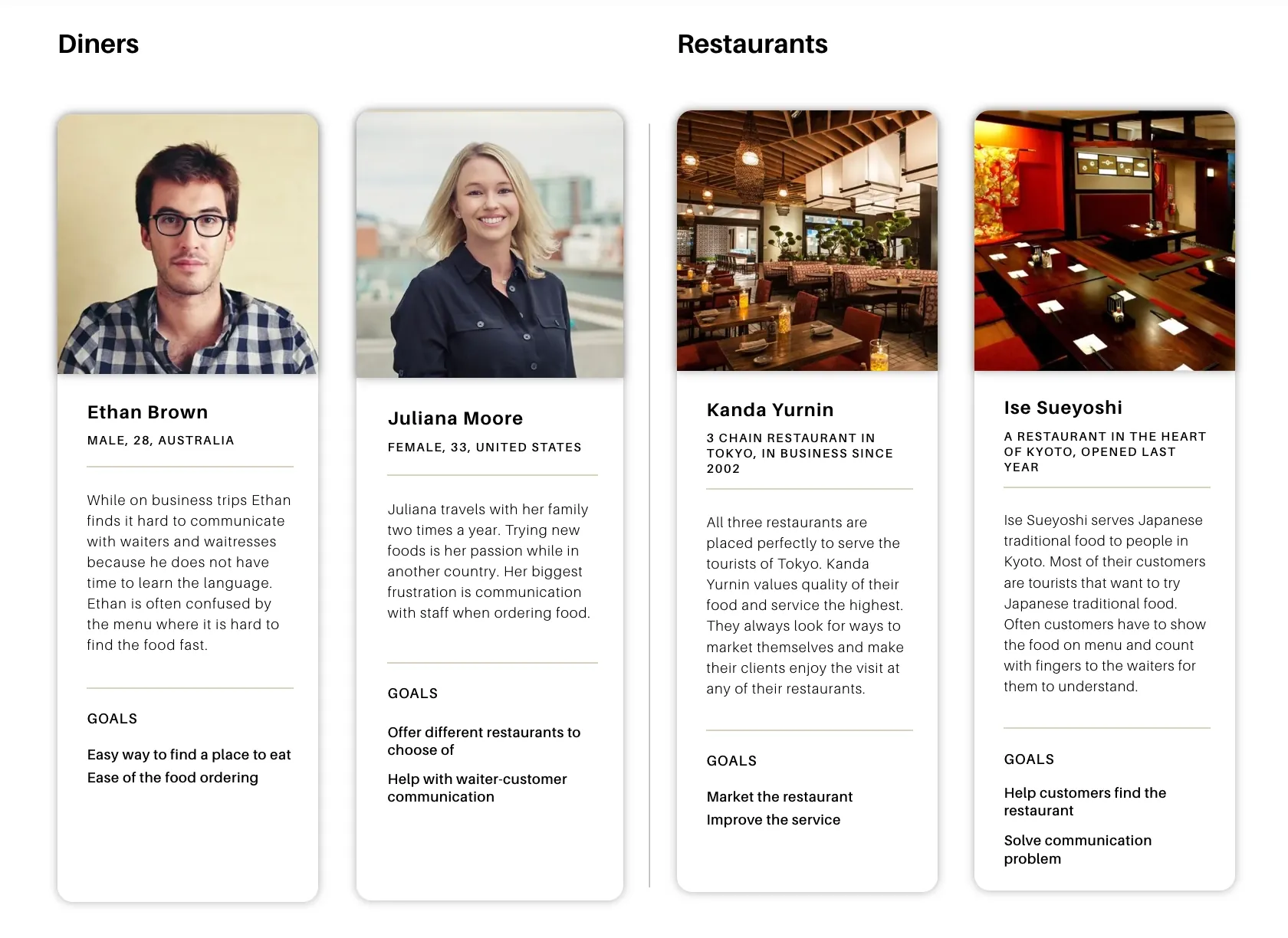
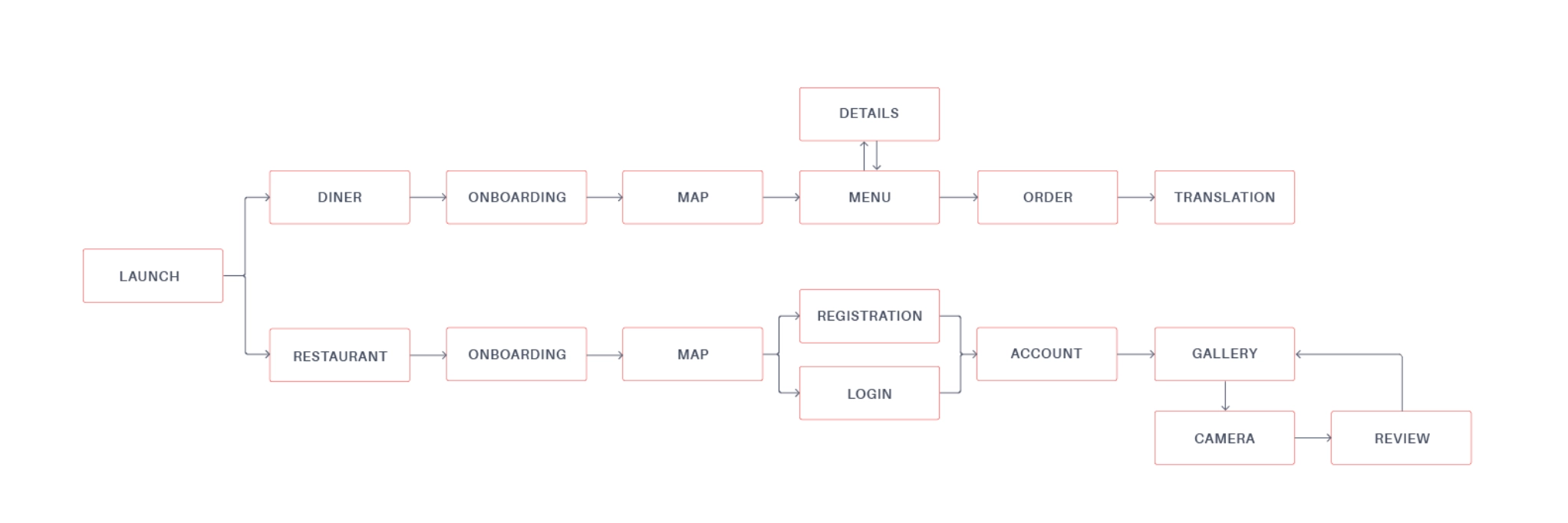
Surveys of people who travel abroad and of restaurants in Japan, usability tests, personas built from that data, then the information architecture before any screens.
Looking back
Today I’d test it in real restaurants with real tourists and waiters, and use AI to translate a menu straight from a photo. The core idea still holds: help people talk to each other, don’t replace the conversation.
Designing for someone in a foreign country, hungry and a little lost, taught me to strip everything back to what helps in that one moment at the table.